
Louisville’s perimeter shooting forced Tennessee to abandon its defensive game plan, handing the Vols their first loss of the season, 84-64.
The Cardinals went 9-for-19 shooting from beyond the arc in the first half forced Tennessee to adjust defensively, creating opportunities for the Cardinals to attack inside.
Here are three takeaways from Tennessee’s final game in the Players Era 16.
Perimeter Punishment
Sometimes a team can execute its scouting report exactly as planned, only to get beaten by it. Louisville entered the contest shooting 29.4% from beyond the arc, so Tennessee’s game plan centered on protecting the paint and forcing the Cardinals to win from the perimeter.
Tennessee’s strategy initially appeared to be working. Louisville shot 4-for-12 from two in the first half, but the same team that had struggled from deep to start the season suddenly couldn’t miss against the Vols. The Cardinals finished the first half shooting 47.4% from beyond the arc, knocking down three of their first four attempts.
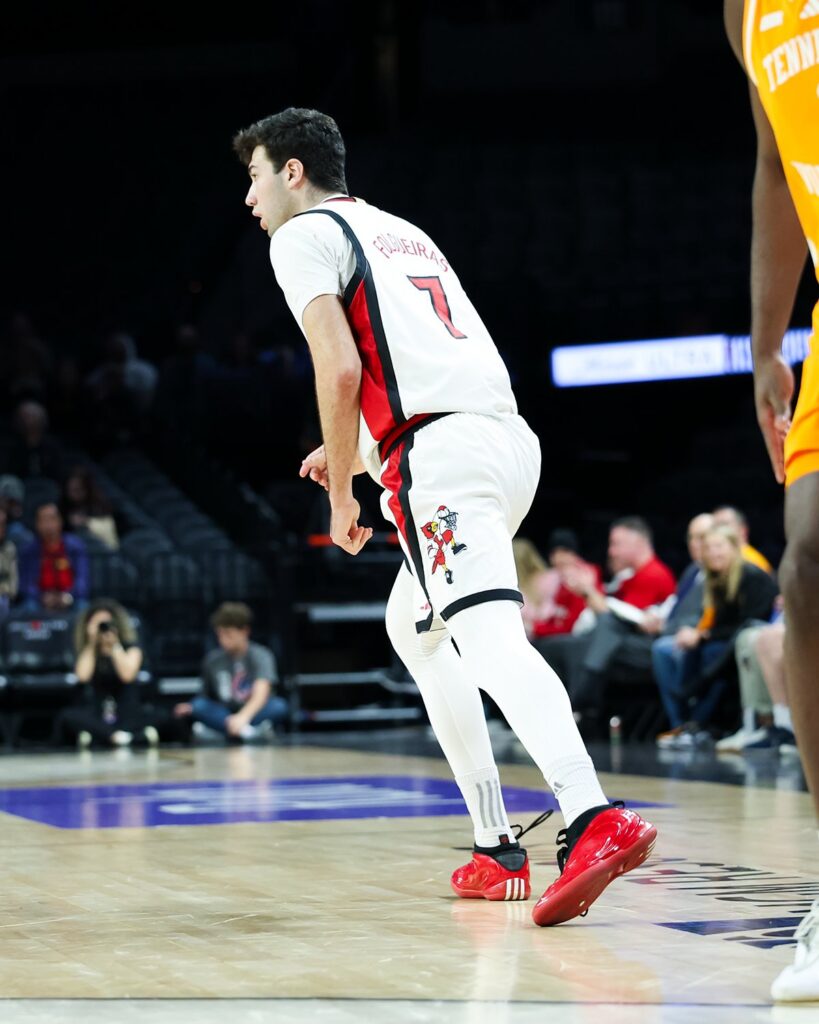
Jackson Shelstad benefited most from the shooting turnaround. The senior entered the contest shooting 13-for-48 (27.1%) from 3-point range, but buried his first attempt over DeWayne Brown with 18:31 remaining in the first half. He never looked back, finishing 4-for-8 from beyond the arc against Tennessee. Three of his 3-pointers came off kickouts following offensive rebounds.
Coverage Confusion
Louisville’s early 3-point shooting threw Tennessee’s defense into chaos. The Vols had to adjust to keep pace with the Cardinals, but those adjustments played directly into Louisville’s strengths.
The Cardinals shot 12-for-17 from inside the arc in the second half and 16-for-29 from two for the game. Many of those opportunities came from breakdowns in Tennessee’s screen coverage. The problems surfaced immediately on Louisville’s first possession of the second half. Dai Dai Ames and Miles Rubin got crossed up defending a back screen, allowing Flory Bidunga to finish with a slam.

Louisville continued to exploit those defensive miscues. With 13:03 remaining, Seth Trimble split Ames and DeWayne Brown, who miscommunicated on their screen coverage. Trimble then threw an alley-oop to Karter Knox for a dunk.
Those were just two examples of the defensive breakdowns that plagued Tennessee throughout the second half. Louisville’s perimeter shooting forced the Vols to adjust, and the Cardinals consistently found ways to punish them for it.
Brown’s Ball Security
DeWayne Brown is the engine of Tennessee’s offense. When the sophomore struggles against physical teams, the Vols need to find other avenues to generate offense. In the last two games, Ames provided that relief, combining for 43 points.
Ames couldn’t provide the same scoring relief against Louisville, finishing with nine points. Brown shot 4-for-8 from the field and committed three turnovers, continuing a trend that is becoming increasingly concerning. He currently leads the team with a 34.5% turnover rate.
Against Louisville, those mistakes came in several forms. A Louisville guard dug down and stripped the ball, Brown dropped a perfect pass from Terrence Hill Jr., and he even dribbled the ball off his foot and out of bounds.
Brown will need to clean up his ball security for Tennessee’s offense to reach its full potential, particularly against the physical defenses it will encounter in SEC play.