
Tennessee’s NCAA Tournament run ended Sunday with a 95-62 loss to Michigan in the Elite Eight, one win shy of the Final Four.
The Vols surrendered a 21-0 run, saw their big men get into foul trouble and lost the early edge they built on the glass.
Here are three takeaways from Tennessee’s season-ending loss.
The Run that Ruined Tennessee
Tennessee looked as if it could hang with one of college basketball’s heavyweights. The Vols led 16-14 with 11:22 left in the first half, but from there, everything unraveled.
Tennessee needed the game to stay physical and in the half-court, but the 21-0 run pushed it into a faster game that favored Michigan. During that span, Tennessee went 0 for 9 from the field, fueling runouts and allowing the Wolverines to play at the frenetic pace they prefer.
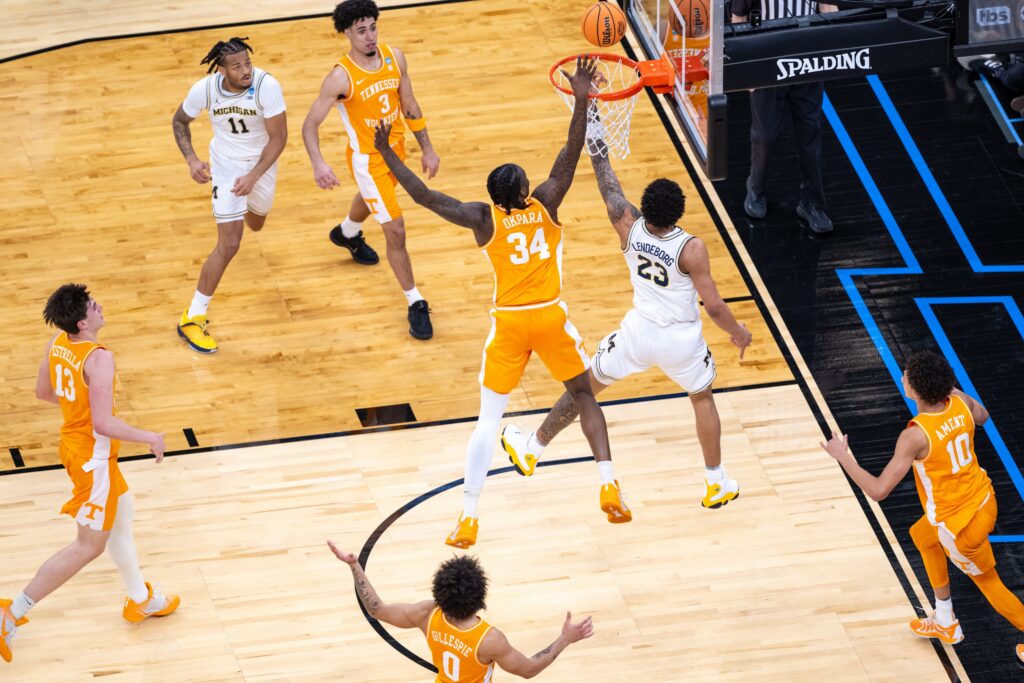
One sequence with less than nine minutes left in the first half captured how quickly the game tilted in Michigan’s favor. Bishop Boswell missed a semi-contested corner 3-pointer, and Tennessee crashed the glass in pursuit of the rebound, leaving itself exposed in transition. Three Wolverines sprinted up the floor, and Roddy Gayle got a clean look from beyond the arc, knocking down a 3-pointer to push Michigan’s lead to 25-16.
From that point on, Tennessee was no longer playing the game it wanted. Michigan turned misses into transition chances and seized control of the tempo.
Rebounding Relief Ran Out
Tennessee, the nation’s top team in offensive rebound percentage, stayed in the game early by dominating the offensive glass, but that edge faded as the game went on. After grabbing seven offensive rebounds in the first five minutes, the Vols were limited to 12 the rest of the way.
That shift was significant because Tennessee either needed to control the glass or make its first shot. When the Vols missed, they often sent three or four players crashing for a second chance, leaving them vulnerable in transition and helping Michigan turn those possessions into 21 fast-break points.
Despite a strong start on the glass, both teams finished tied with 42 rebounds. As Michigan gradually took away the Vols’ biggest advantage on the glass, the difference between hanging around and losing by 33 points became clear.
Once Michigan started neutralizing Tennessee’s second-chance opportunities, the Vols had far fewer ways to generate offense. That left Tennessee settling for contested 3-pointers and difficult post touches against Michigan’s size. Ja’Kobi Gillespie embodied those struggles, finishing 8 for 22 from the field and 4 for 13 from 3-point range.

Big Man Foul Trouble
The Vols struggled to stay in the fight on the glass once fouls started mounting on their big men.
Felix Okpara, who plays a vital role in Tennessee’s defensive scheme and as an offensive screener, picked up two quick fouls. Barnes is typically quick to sit players who pick up two first-half fouls, so Okpara’s trip to the bench was immediate.
Less than four minutes after Okpara picked up his second, Jaylen Carey was called for his second foul while trying to stop Morez Johnson on a duck-in. Barnes then turned to freshman DeWayne Brown, who picked up two fouls in just two first-half minutes of action.
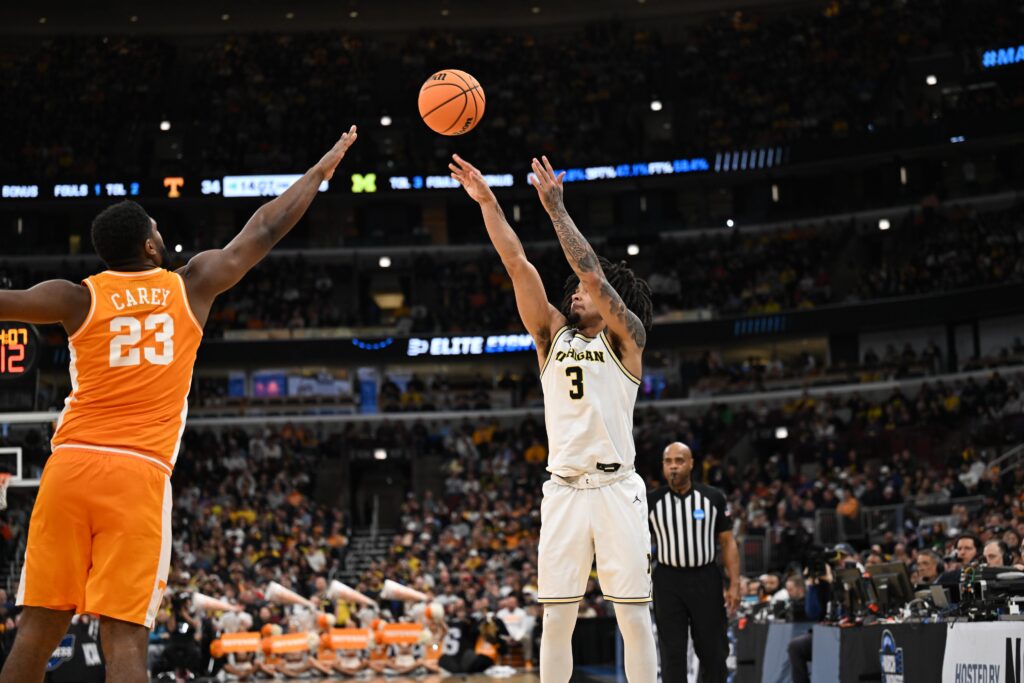
The coaching staff eventually had to live with playing Okpara on two fouls in the first half, but 30 seconds after he re-entered the game, he picked up his third.
With Tennessee’s big men in foul trouble, the Vols could not play with the physicality they wanted. That showed up on the glass and around the rim, helping bring Tennessee’s season to an end.
